
A balcony garden can look productive without you really knowing how productive it was.
You pick a few lettuce leaves for lunch. A handful of radishes comes out of a container. You snip some herbs for dinner. A few tomatoes ripen over the course of several weeks.
None of these harvests may seem particularly significant on their own.
But add them all together, and you may discover that your balcony produced considerably more food than you realized.
That is one of the interesting things about growing food in containers. Production does not always arrive as one large harvest. Quite often, it comes in small amounts, repeatedly, from different containers and at different times of the year.
If you want to understand how productive your balcony really is, it helps to start paying attention to those harvests.
Not because you need to turn gardening into an accounting exercise.
And I certainly hope you do not feel the need to compete with somebody else’s garden.
The point is simply to find out what your growing space is actually capable of producing.
I think it may surprise you. In a good way.
Why We Often Underestimate Our Harvests
Most gardeners don’t weigh everything they pick.
And there is nothing wrong with that.
You are growing food because you want to eat it, not because you are running a commercial farm.
But this does mean that it is very easy to underestimate how much you have actually grown.
We tend to remember the obvious harvests.
A basket full of tomatoes is memorable. So is a large crop of potatoes or a particularly successful cucumber plant.
Small harvests are different.
You might pick a few leaves of lettuce without giving it much thought. You might cut some parsley. Pull a few green onions or radishes. You might pick tomatoes whenever they are ripe rather than collecting them all at once.
Those small harvests can easily disappear from your memory.
The same thing happens with repeated harvesting. If you pick something several times a week, each individual harvest may seem insignificant.
But the total can be surprisingly meaningful.
This is one reason I like to think about gardening in terms of production over time rather than simply looking at what is growing right now.
A balcony does not need to produce a huge amount of food in one moment to be productive.
It can produce a little today, a little next week, and something completely different a few weeks later.
That all counts.
Small Harvests Add Up
Maybe you harvested a handful of salad leaves several times.
None of those harvests would look particularly impressive on a kitchen scale.
But if that container continues producing for weeks, you have had fresh food from a relatively small amount of growing space over an extended period.
The same applies to herbs.
A few sprigs of parsley might not feel like a harvest worth recording. But if you regularly walk outside and cut what you need instead of buying another bunch from the supermarket, that plant is doing a job for you. It has value.
This is especially important on a balcony because many useful crops are naturally harvested in small quantities.
You don’t necessarily need a large quantity of any one crop for your cooking.
You can have a little lettuce, some radishes, a few green onions, some herbs, a handful of tomatoes and perhaps another crop coming along behind them.
This is how I harvest from my own balcony.
The individual harvests may be small.
Together, they become a meaningful contribution.
This is also why I think the word harvest can sometimes be misleading.
We tend to imagine a harvest as a large event. Or a large volume.
In a productive container garden, harvesting can be something you do several times a week.
The food simply keeps arriving. And that’s exactly what I want.
One Container Can Produce More Than You Think
There is another reason us balcony gardeners can underestimate productivity.
We often judge a container by the crop that is currently growing in it.
You might look at a container of radishes and think, “That’s a container of radishes.”
But what happens after you harvest them?
If you plant something else in that container, it has not stopped being productive.
It has simply changed jobs.
Perhaps the next crop is lettuce. Later, that might be followed by another crop that prefers different conditions.
The same piece of growing space can therefore contribute several harvests during the year.
This is one of the fundamental ideas behind the Multi-Harvest Container System.
I don’t look at a container and ask only:
How much did this crop produce?
I also want to know:
How much food did this growing space produce over the course of the year?
Those are two very different questions.
The first tells you something about one crop.
The second tells you something about the productivity of the space itself. Of that container.
And when you have limited space, I think that second question becomes much more interesting.
Think About Harvests, Not Just Crops
It is natural to count plants.
You have three tomato plants, four lettuce plants and a container of radishes.
But those numbers don’t tell you very much about your actual food production.
One tomato plant may produce a dozen tomatoes for weeks.
A container of radishes might give you one main harvest and then be replanted.
A lettuce plant might be harvested gradually, leaf by leaf.
Herbs may provide small amounts whenever you need them.
Different crops behave differently, so simply counting plants does not give you a particularly good picture of productivity.
Containers aren’t much better as a measurement.
Ten containers does not automatically mean that someone has a more productive garden than someone with five.
What matters is what those containers actually produce.
That is why I find it more useful to think in terms of harvests from growing space.
What did this container give me?
What did this balcony produce over the season?
And, perhaps most importantly:
What could I do differently to make this growing space more productive next time?
That last question turns measuring into something useful.
What Counts As A Harvest?

I wouldn’t make this complicated.
If you picked it and ate it, count it.
A bowl of lettuce counts.
A handful of radishes counts.
The green onions you pulled for dinner count.
The tomatoes you picked one at a time count.
The herbs you snipped for a meal count.
Even a few leaves picked from a plant can count.
You don’t need to decide that something is only a “real harvest” if it fills a basket.
The purpose of keeping track is not to make your harvests sound impressive. It is to make you more aware of what your garden is actually doing.
You can record harvests in whatever way makes sense to you.
If you have kitchen scales and enjoy weighing things, by all means use them.
If you don’t, an approximate description is perfectly fine.
That’s how I personally like to do it. I may write in my garden journal:
“One bowl of salad.”
“Two handfuls of radishes.”
“Several tomatoes.”
“Herbs for dinner.”
That is already more information than you had before.
And if you do this for an entire growing season, you will start to build a much clearer picture.
You Don’t Need A Complicated Record-Keeping System
There are plenty of ways to keep gardening records.
You can use a spreadsheet.
You can create a detailed gardening journal.
You can record everything by weight.
Or you can simply write a few words in a notebook like I do.
Choose the simplest system you are actually going to use.
For example, you could record four things:
- Date
- Crop
- Approximate amount
- Anything worth remembering
That’s enough.
You might write:
June 14 — lettuce — one bowl — very good growth.
Or:
July 3 — tomatoes — first handful — plant growing well.
You don’t need to spend five minutes recording a handful of parsley.
If recording every tiny harvest starts to feel like work, simplify the system.
The record is supposed to help your gardening, not become another gardening task you have to keep up with.
You could even record only once a week and make a rough note of what you harvested.
The important thing is not precision.
It is awareness.
Measure What Matters To You
There is perhaps no single best way to measure the productivity of a balcony.
Weight is one possibility.
But it isn’t the only one.
You might be more interested in how many meals your balcony contributed to.
Perhaps your goal is to have fresh salad available for as much of the year as possible.
Maybe you particularly value herbs because you use them constantly.
Or you might want to know which crops are worth growing because they replace things you would otherwise buy. That’s also a great way to look at it.
You might even be interested in how long a particular container remained productive.
All of these are legitimate ways of looking at productivity.
For example, imagine that one container provides salad for several weeks, followed by another crop later in the year.
The important number may not be the total weight.
It might simply be that one small piece of growing space supplied fresh food for a substantial part of the year.
That is valuable information.
And it is information you can use.
The most helpful comparison is usually not between your garden and somebody else’s.
It is between your garden this year and your garden last year.
Did you get more from the space?
Did you have fewer failures?
Did you find crops that performed particularly well?
Did you keep containers productive for longer?
Those are the comparisons that can actually improve your gardening.
Look At What Worked — And What Didn’t
Once you start keeping even a basic record, you may notice patterns.
It could be one crop produced far more reliably than you expected.
It could be something you thought would be highly productive turned out to take a lot of space for relatively little food.
Maybe one container combination worked extremely well.
Perhaps another looked good at the beginning but struggled later.
This is where harvest records become more than a list of what you picked. They become feedback.
You can start asking questions such as:
Which crops were worth the space they occupied?
Which crops did I actually enjoy eating?
Which containers stayed productive for a long time?
Which crops gave me repeated harvests?
Which crops disappointed me?
And:
What would I grow differently next year?
There is no failure in discovering that a crop isn’t worth growing on your particular balcony.
That is useful information.
You have learned something about the combination of your space, your conditions, your time and the crop itself.
And that knowledge can be worth more than another packet of seeds.
Your Harvest Tells You Something About Your Balcony
Your harvest is also telling you something about your growing conditions.
A crop that performs well is giving you information.
A crop that struggles is giving you information too.
Perhaps a container receives less sunlight than you thought.
Maybe the wind is stronger in one particular position.
Perhaps a crop dries out too quickly.
Maybe a larger container makes a noticeable difference.
What if a particular crop simply doesn’t like the conditions you can provide.
This is why gardening experience becomes so valuable over time.
You begin to understand your own growing space.
You stop relying entirely on general advice because you have seen what actually happens where you live.
This doesn’t mean general gardening advice is unimportant.
It gives you a starting point.
But your balcony gives you the final answer.
If you consistently harvest good crops from one particular container in one particular position, that is something worth remembering.
If another combination repeatedly disappoints you, that is worth remembering too.
Your plants are constantly giving you information.
Your harvest is part of that conversation.
Use What You Learn To Plan The Next Season
The point of looking back isn’t to admire the numbers.
Although you really should take pride in them, however big or small. Because you grew food, and that’s already awesome.
But looking back is to make next year’s growing (even) better.
If a particular crop produced well, perhaps you want to grow more of it.
If another crop struggled, maybe you give it less space or try it somewhere else.
If one succession worked particularly well, you can repeat it.
If a container remained productive from spring into autumn, you can think about how to make that transition even smoother next time, or extend it into winter.
You may also discover that some of your biggest opportunities aren’t about adding more containers at all.
They may be about using the containers you already have more effectively.
A container that sits empty for several weeks between crops represents a potential opportunity.
A crop that is harvested once and then left occupying the container for another month may represent another.
A container that could have two or three productive lives during the year is worth looking at differently from one that produces a single crop and then stops.
This is where the idea of succession planting becomes much more than simply “plant another crop later.” It becomes a way of increasing the amount of food you can get from the same growing space.
And that is one of the reasons I find it so useful to look at the entire year rather than individual planting dates.
The Real Measure Of A Productive Balcony
So, how much food did your balcony actually produce?
You may not know yet.
And that’s perfectly fine.
You don’t need to go back and reconstruct every harvest you’ve ever made.
You can simply start paying attention from now on.
What you may discover is that your balcony produces more than it looks like it does.
Not because you suddenly start growing enormous quantities of food. But because all those small harvests start adding up.
A few leaves here.
Some radishes there.
Fresh herbs whenever you need them.
A handful of tomatoes.
A container harvested, cleared and planted again.
Another crop following behind it.
Over time, these individual events become a pattern. And that pattern is what makes a balcony food garden productive.
I don’t think the goal should be to produce the largest possible harvest from every container. Gardening should still be enjoyable.
There will be failures. There will be empty containers. There will be crops that don’t perform as expected. Sometimes the weather will simply have other ideas.
The goal is to make good use of the space you have.
To learn what works.
To improve gradually.
And to keep the growing space producing when conditions allow.
That is also why I think productivity should be measured over time.
Not just by what is growing today.
Not just by the size of one harvest.
And not by how your balcony compares with somebody else’s.
Ask a different question:
How much food can I get from the growing space I have, over the course of the year?
Once you start looking at your balcony that way, you may discover that you are growing considerably more food than you thought.
And you may also discover that there is still plenty of room to improve.
That is the interesting part.
You don’t need more space to start learning.
You just need to start paying attention to what the space you already have is producing.
If you want to learn the complete system, my book The Multi-Harvest Container System Starter Guide brings together the principles of succession planting, companion planting, soil management and efficient container growing, along with practical high-yield container setups you can adapt to your own balcony.
Recommended Further Reading
If you found this article helpful, these are good places to continue:
How Productive Can A Balcony Container Really Be?
One Pot, Multiple Harvests: The Idea Behind The Multi-Harvest Container System
Stop Thinking In Growing Seasons, Start Thinking In Production Cycles
About Me
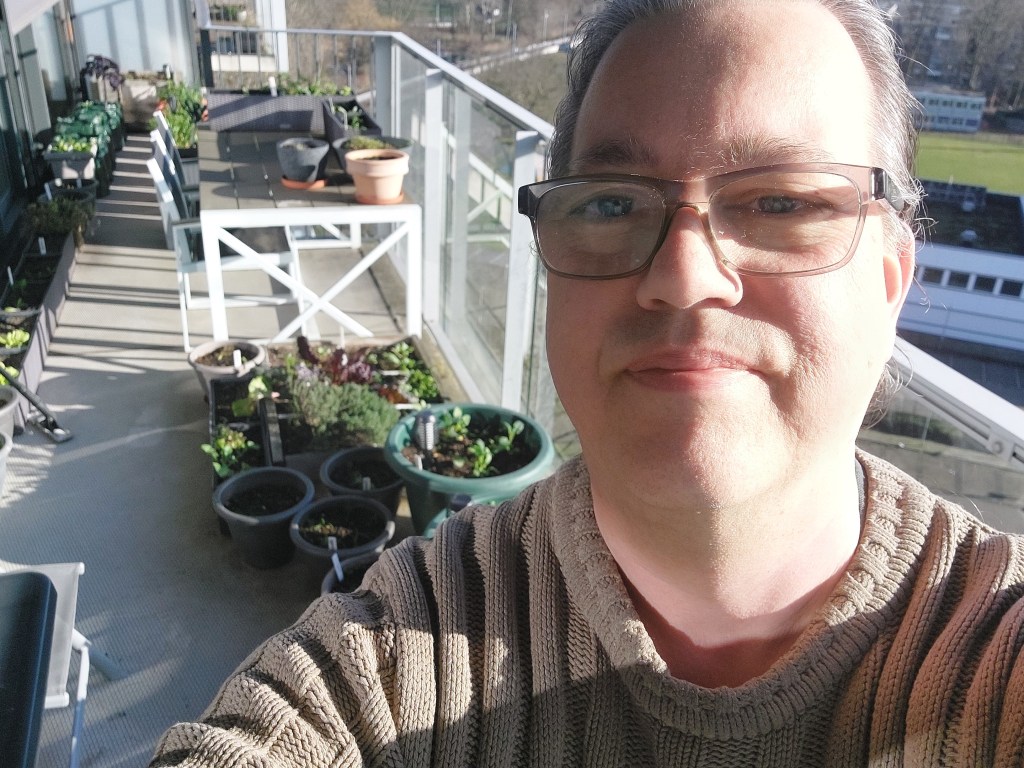
I’m Jim, the gardener behind Balcony Food Factory.
I’ve been growing food for decades, from allotments to my current 10th-floor balcony, where I’ve learned how to grow a surprising amount of food in a surprisingly small space.
Balcony Food Factory is where I share what I’ve learned about growing more food in containers, making the most of limited space, and keeping things practical and manageable.
Want more? Subscribe to the Balcony Food Factory newsletter and I’ll send you practical growing advice, ideas and lessons from my own balcony garden straight to your inbox. You’ll get the below eBook for free too, as a welcome gift. Just click on the image to sign up.
See you there!

A Note About Climate
I garden in Schiedam, the Netherlands, where we have a temperate maritime climate with mild winters, relatively cool to warm summers, and rainfall throughout the year. As a general comparison, my location is approximately USDA Hardiness Zone 8b.
Growing conditions vary considerably between regions, so planting dates, growing seasons, temperatures, and crop recommendations may differ where you live. Please adapt the advice in my articles to your own local climate, weather patterns, and growing conditions.
Leave a Reply