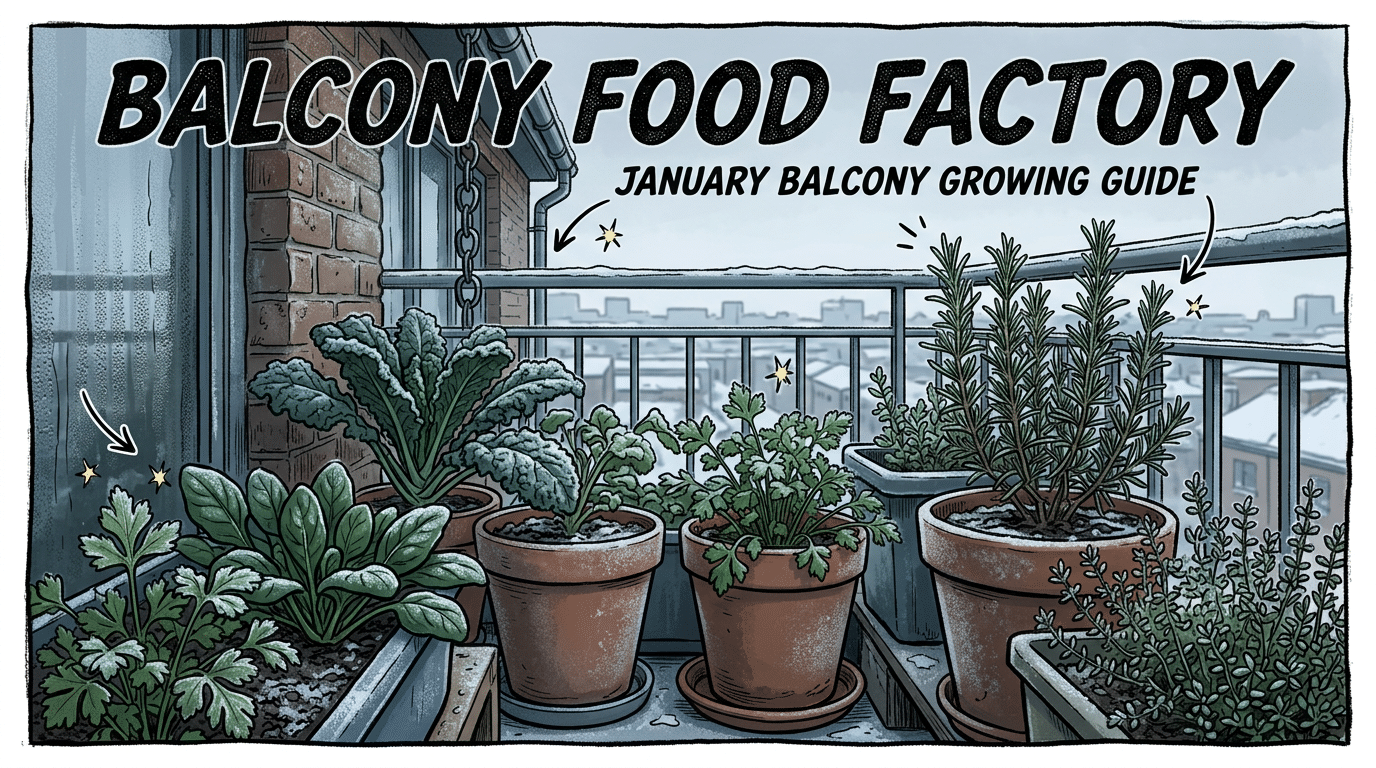
January is a month for maintaining production, protecting established crops, and preparing for the growing season ahead.
Outdoor growth is slow, daylight is limited, and cold, wet conditions can make container gardening more challenging.
However, established winter greens can continue providing fresh leaves, hardy herbs can remain productive, and containers can be maintained ready for their next crops.
January is also an excellent time to try something different, like growing microgreens indoors! Microgreens bring fresh food production into the kitchen when outdoor growing opportunities are limited. They need little space, develop quickly, and can provide a regular supply of young leaves without waiting for spring.
Microgreens bring fresh food production into the kitchen when outdoor growing opportunities are limited. They need little space, develop quickly, and can provide a regular supply of young leaves without waiting for spring. So I’ve included them in this guide as well.
The main objective this month is simple: keep existing crops healthy, make the most of realistic winter harvests, and prepare for a productive spring without rushing the season.
January At A Glance
| Category | January Overview |
|---|---|
| Growing conditions | Cold, damp, short days and limited sunlight |
| Main activity | Maintaining established winter crops |
| Outdoor sowing | Not recommended without protection |
| Indoor growing | Microgreens and pea shoots |
| Planting | No new planting recommended |
| Harvesting | Winter greens, hardy herbs and any remaining protected crops |
| Main challenge | Excess moisture, poor drainage, frost and wind |
| Preparation | Review containers, potting mix, seeds and spring planting plans |
Five Priorities For January
- Check moisture rather than watering automatically. Cold potting mix dries slowly, and excessive moisture can damage roots.
- Protect established winter crops. Pay attention to exposed containers, strong winds and freezing conditions.
- Harvest selectively. Take outer leaves from established greens so plants can continue producing.
- Prepare for spring gradually. Check seeds, containers and supplies without starting summer crops too early.
- Why not start an indoor microgreens project? Grow fresh young greens in a small space while outdoor production is slow.
What To Sow, Plant And Harvest
| Activity | Crops |
|---|---|
| Sow indoors | Radish, broccoli, mustard, peas and other suitable microgreens |
| Sow outdoors | Generally postpone routine sowing until conditions improve |
| Plant outdoors | No new vegetable planting recommended |
| Harvest | Kale, spinach, lettuce, rocket (arugula), endive, winter purslane, parsley and hardy herbs where established |
Things To Watch Out For
- Waterlogged potting mix following prolonged rain.
- Containers exposed to freezing winds.
- Frozen potting mix, which prevents roots from taking up water.
- Damaged drainage holes or blocked drainage.
- Slugs hiding around containers and underneath pots.
- Weak, pale growth caused by limited daylight.
- Tender herbs suffering from cold and excessive moisture.
The Most Important Growing Lesson
January is about protecting productive potential rather than trying to force growth. A healthy container with established winter greens is often more valuable than a newly sown container that struggles in cold, dark conditions.
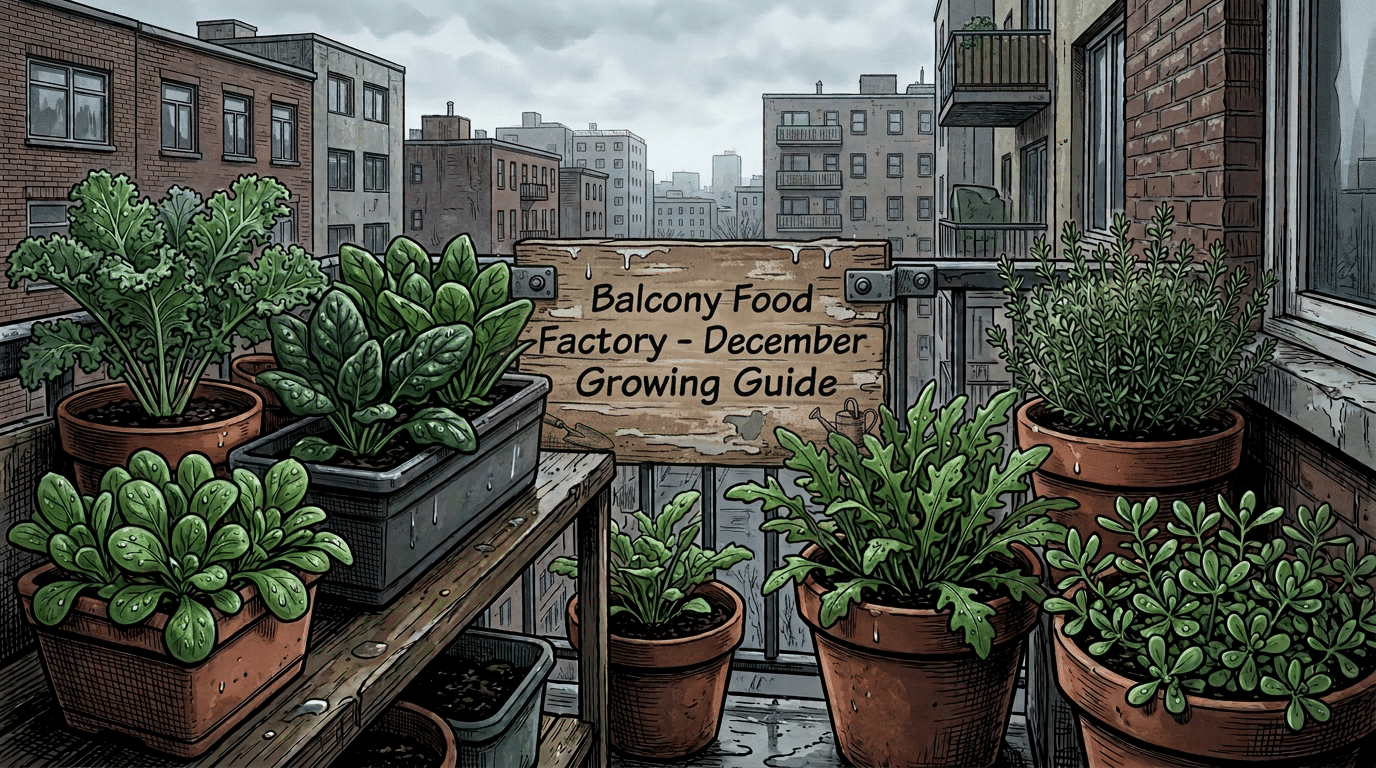
Balcony Status And Actions


All photo’s copyright Jim Boere / balconyfoodfactory.com
January is usually one of the quietest months for outdoor vegetable growing in the Netherlands and similar temperate climates. However, quiet does not mean maintenance-free.
The combination of cold temperatures, limited daylight, rain and wind creates conditions that can be harder on container-grown plants than on plants growing in the ground.
A container has a relatively small volume of potting mix, so its roots experience temperature and moisture changes more quickly. This makes regular inspection particularly important.
Temperature And Daylight
Daylight is still limited in January, although the days are gradually getting longer.
Plants respond to both temperature and light. Even on relatively mild days, low light levels limit how quickly most vegetables can grow.
What to do:
- Expect established winter greens to grow slowly.
- Avoid encouraging new growth with unnecessary feeding.
- Keep containers where they receive as much available daylight as possible.
- Remove unnecessary obstructions that shade established crops.
- Don’t mistake slow growth for a problem if the plants remain healthy.
A plant that produces only a few new leaves during January may still be performing perfectly well. It’s just, well, January.
Moisture And Watering

Water management is one of the most important jobs this month.
Rain may keep containers moist for several days, particularly those with limited exposure to wind and sunlight. However, balconies with overhangs or sheltered positions can also remain surprisingly dry.
Rather than following a watering schedule, inspect individual containers.
My approach is to check each pot rather than assuming they all need the same amount of water. A small container with established greens can dry out differently from a large planter containing a dormant or slow-growing plant.
Practical watering advice:
- Check the potting mix below the surface with your finger before watering.
- Water only when the upper layer has started to dry and the deeper mix is not already saturated.
- Water during the warmer part of the day when possible.
- Avoid leaving containers standing in water.
- Make sure drainage holes remain unobstructed.
- Don’t allow plants to become completely dry simply because it is winter.
Cold, saturated potting mix restricts the oxygen available to roots. This can lead to root damage and encourage fungal problems.
Wind Exposure
Wind can be particularly troublesome on elevated balconies.
Cold winds increase moisture loss from leaves and can damage exposed plants. Containers can also become unstable during strong gusts.
Check:
- Whether taller plants or supports are still secure.
- Whether protective covers are firmly attached.
- Whether lightweight containers could be blown over.
Where possible, group vulnerable containers together in a sheltered position.
Avoid creating completely enclosed spaces with plastic covers. Plants still need air circulation, especially during damp weather.
Drainage And Waterlogged Containers

January is an excellent time to check drainage throughout the balcony.
Containers that remain wet for long periods need attention.
Lift pots slightly where possible to improve drainage and prevent them from sitting directly in pooled water.
Check that:
- Drainage holes are not blocked by roots or compacted potting mix.
- Saucers are not collecting rainwater.
- Containers are not sitting in waterlogged corners.
- Potting mix has not become excessively compacted.
Raising containers on pot feet or similar supports can make a considerable difference.
If you use saucers to protect the balcony floor, empty them after rainfall rather than allowing them to remain full throughout winter.
Frost Protection

Most established winter vegetables are reasonably hardy, but their tolerance varies.
Kale, established spinach and many winter salad varieties can tolerate cold conditions. However, plants in containers have less insulation around their roots than plants growing in the ground.
During periods of hard frost:
- Move vulnerable pots closer to a sheltered wall.
- Group containers together to reduce exposure.
- Wrap vulnerable containers rather than covering every plant unnecessarily.
- Use horticultural fleece when additional protection is needed.
- Avoid handling frozen leaves until they have thawed.
Remember that fleece provides limited frost protection. It is not a substitute for moving particularly vulnerable plants indoors.
Terracotta and other frost-sensitive pots may also need protection from cracking.
Pest And Disease Monitoring

Winter does not eliminate all pests and diseases.
Slugs can remain active during mild, wet periods. Aphids may persist on sheltered plants, while poor ventilation and excessive moisture can encourage fungal problems.
Inspect the following:
- Undersides of kale and other brassica leaves.
- The growing centers of lettuce and endive.
- Dense clusters of leaves where moisture remains trapped.
- The surface of potting mix for slugs and other pests.
- Damaged or yellowing leaves that could indicate a developing problem.
Remove dead or diseased foliage promptly.
Avoid removing healthy leaves simply because they look less attractive during winter. Established foliage is still helping the plant survive until growing conditions improve.
What To Sow, Plant And Harvest In January
January is not a month for filling every available container with new crops.
Outdoor sowing is generally best postponed unless you have a genuinely protected growing environment and are deliberately experimenting.
The most reliable opportunity for new food production this month is indoors; see below.
Sowing Table
| Crop | When And How To Sow | Growing Requirements | Expected Harvest Or Next Stage | Qualifications |
|---|---|---|---|---|
| Radish microgreens | Sow densely indoors in a shallow tray | Moist seed-starting mix and good light | Approximately 7–14 days | Fast-growing and pleasantly peppery |
| Mustard microgreens | Sow indoors in a shallow tray | Bright position and good airflow | Approximately 7–14 days | Strong, spicy flavor |
| Broccoli microgreens | Sow densely indoors | Clean tray, light and moderate moisture | Approximately 8–14 days | Mild flavor |
| Pea shoots | Soak suitable untreated pea seeds and sow closely in a deeper tray | Bright position and consistently moist mix | Approximately 10–21 days | Allow enough depth for roots |
| Cress | Sow indoors on a suitable moist growing surface | Bright position after germination | Approximately 5–10 days | Particularly easy for beginners |
Harvest estimates are approximate and depend on seed variety, indoor temperature, light and growing conditions.
What About Ordinary Vegetable Sowing?
For a typical unheated balcony in the Netherlands or similar temperate climate, I would not recommend starting ordinary vegetable seedlings outdoors in January.
Some gardening calendars recommend early indoor sowings of lettuce, spinach and other vegetables. These can work in protected environments, but they are not necessary for a beginner growing on a normal balcony.
There is little advantage in producing weak, stretched seedlings simply to start a few weeks earlier.
February starts the outdoor sowing season with broad beans and peas. With March will come more opportunities as well as the start of the main indoor seed-starting period. For now, be patient.
Microgreens are different. They are grown specifically for their young leaves and are intended to be harvested quickly, rather than developed into mature vegetable plants.
Planting Table

January offers few worthwhile new planting opportunities for ordinary balcony vegetables.
| Crop | What To Plant | Container Requirements | Important Considerations |
|---|---|---|---|
| Garlic | Maintain autumn-planted cloves | Deep container with good drainage | Allow established plants to develop naturally |
| Onion sets | Maintain autumn-planted sets | Container with good drainage | Avoid disturbing the bulbs during winter |
| Kale | Maintain established plants | Large, stable container | Harvest outer leaves selectively |
| Winter lettuce | Maintain established plants | Shallow to medium-depth planter | Protect from prolonged hard frost |
| Parsley | Maintain established plants | Medium-sized pot | Avoid waterlogged potting mix |
| Thyme | Maintain established plants | Well-drained pot | Keep relatively dry during cold weather |
I do not recommend purchasing and planting new vegetable seedlings simply to fill empty containers this month.
If a container becomes available, it is perfectly reasonable to clean it, inspect the potting mix and leave it ready for the next appropriate crop.
Harvest Table


All photo’s copyright Jim Boere / balconyfoodfactory.com
January harvests depend heavily on what was planted earlier in the year and how well it has survived autumn and winter.
| Crop | What To Look For | Harvesting Advice |
|---|---|---|
| Kale | Firm, healthy outer leaves | Pick lower outer leaves and protect the growing center |
| Spinach | Established, healthy leaves | Harvest individual leaves rather than removing the whole plant |
| Winter lettuce | Mature outer leaves | Take a few leaves at a time |
| Rocket | Healthy young leaves | Harvest selectively to encourage continued growth |
| Endive | Established leafy growth | Take outer leaves when large enough |
| Winter purslane | Tender green shoots | Harvest small sections, leaving plenty of growth |
| Parsley | Healthy, established stems | Cut outer stems near the base |
| Thyme | Healthy aromatic stems | Take small amounts without cutting heavily into woody growth |
| Rosemary and sage | Healthy established shoots | Harvest sparingly during winter |
A Note On Winter Harvests
Don’t expect every crop to produce continuously throughout January.
A plant that was productive in October may now be producing very little new growth. This is normal.
The aim is to harvest what is available without exhausting plants that need to survive another few weeks of cold weather.
If you have several containers of the same crop, rotate your harvesting rather than taking large quantities from one plant.
Container Turnover And Production Cycles
The Multi-Harvest Container System approach is not about constantly planting something new. It is about making sensible decisions about every container as its current crop develops, finishes or becomes unproductive.
January is a good month to assess which containers are still producing and which are approaching the end of their current production cycle.
Identify Containers That Are Finishing
Some autumn crops may be reaching the end of their harvesting period.
Look particularly at:
- Lettuce that has become damaged or exhausted.
- Rocket that has stopped producing healthy new leaves.
- Spinach plants that have deteriorated.
- Winter salad plants damaged by repeated freezing.
- Herbs that have become woody or unhealthy.
Do not remove a healthy plant just because it is growing slowly.
A winter crop can remain productive for longer than expected when given the right protection.
Decide Whether To Keep, Replace Or Rest
For each container, make one of three decisions:
| Container Condition | Recommended Action |
|---|---|
| Healthy and productive | Keep harvesting selectively |
| Healthy but temporarily slow | Protect and maintain |
| Finished or diseased | Remove the crop and prepare the container |
This simple assessment prevents unnecessary clearing and avoids wasting established plants.
Refreshing Potting Mix
If a crop has finished, remove the old plant and inspect the potting mix.
Don’t automatically empty the container.
For healthy potting mix:
- Remove old roots and visible plant debris.
- Loosen the upper layer gently.
- Remove any compacted or poorly drained material.
- Add fresh potting mix or mature compost where appropriate.
- Refill the container to its previous level.
If the mix has become depleted, compacted or difficult to wet evenly, a more substantial refresh may be necessary.
Never reuse potting mix from plants with serious root disease without addressing the underlying problem.
Feeding During Winter
Most established vegetables grow slowly in January, so they generally need less feeding than during the active growing season.
Avoid applying liquid fertilizer simply because a container has not been fed recently.
If you are preparing a container for a new crop, consider its previous use and the condition of the potting mix.
A small amount of mature compost can help replenish organic matter, but don’t overload containers with fresh nutrients when plants are barely growing.
Save more substantial feeding for when active growth resumes.
Avoiding Idle Containers

An empty container in January is not necessarily wasted space.
If outdoor conditions are unsuitable for a new crop, forcing one into the container can create more work than production.
Instead:
- Keep the container clean and draining properly.
- Protect the potting mix from erosion and excessive rain where appropriate.
- Make a note of which crop will follow.
- Check whether the container needs refreshing before spring.
Plan The Next Production Cycle
Start thinking about what will follow established winter crops.
For example:
| Current Crop | Possible Follow-Up |
|---|---|
| Winter lettuce | Spring lettuce or another salad crop |
| Rocket | Spring spinach or lettuce |
| Winter purslane | Spring salad leaves |
| Spinach | A later spring or early summer crop |
| Kale | Continue harvesting until the plant becomes exhausted |
These are planning suggestions rather than January planting instructions. Actual turnover will depend on when the current crop finishes and when conditions allow the next crop to establish.
The important thing is to know what you want to grow next before a container becomes available.
Growing Herbs In January

Herbs need relatively little attention in January, but their requirements differ considerably.
Some are naturally adapted to cold conditions, while others need protection to survive winter.
Hardy Herbs
These herbs can generally remain outdoors in a reasonably sheltered position:
| Herb | January Care |
|---|---|
| Thyme | Keep potting mix well drained and harvest lightly |
| Rosemary | Protect from prolonged hard frost and avoid wet roots |
| Sage | Harvest sparingly and maintain good drainage |
| Chives | Allow dormant or slow-growing plants to recover naturally |
| Mint | Keep outdoors in its container; growth may die back during winter |
| Parsley | Protect from severe frost and harvest healthy outer stems |
Thyme, rosemary and sage are particularly vulnerable to winter wetness when grown in containers.
They generally cope better with cold conditions when their roots are not sitting in saturated potting mix.
Tender Herbs
Tender herbs such as basil should not be left outside during freezing weather.
Basil is particularly sensitive to cold and generally needs a warm, bright indoor position if you want to keep an established plant alive.
However, don’t expect a summer-sized basil plant to remain productive throughout winter.
Limited daylight often results in slow, weak growth.
If you bring basil indoors:
- Place it in the brightest available position.
- Keep it away from cold drafts.
- Water carefully.
- Avoid allowing water to collect in the saucer.
- Remove damaged leaves regularly.
Herbs That Can Continue Producing Outdoors
Parsley, thyme, sage and rosemary can all provide small amounts of fresh herbs during January, depending on their condition and exposure.
Harvest lightly.
The objective is to take enough for cooking without removing so much foliage that the plant struggles to recover.
Mint and chives may look unattractive or die back above ground during colder periods. This does not necessarily mean the plants have died. Their roots can remain alive and produce fresh growth when temperatures rise.
Seasonal Preparation And Protection
January is a good month to maintain winter protection and make a few preparations for the coming growing season.
There is no need to transform the entire balcony or begin preparing summer containers immediately.
Concentrate on protecting what is already growing and making sure the basic growing infrastructure is in good condition.
Maintain Productive Winter Greens


Don’t clear healthy winter crops to make the balcony look tidy.
Established kale, spinach, lettuce, rocket and other hardy greens can continue providing harvests.
Remove damaged foliage, check for pests and make sure plants have enough room for airflow.
If you use fleece, check it regularly for damage and make sure it is not pressing heavily against wet foliage.
Remove or open protective covers when conditions allow ventilation.
Protect Containers Rather Than Emptying Them
Winterizing a balcony does not mean removing every pot.
Many established crops are perfectly capable of surviving winter outdoors.
Instead, focus on:
- Protecting vulnerable roots.
- Preventing waterlogging.
- Securing containers against wind.
- Keeping drainage holes clear.
- Protecting frost-sensitive pots.
- Moving particularly vulnerable plants to sheltered positions.
This allows you to retain established plants and continue harvesting.
Inspect Supports And Equipment
January is a good time to check the condition of equipment before the busy growing season returns.
Inspect:
- Bamboo canes and climbing supports.
- Plant ties and clips.
- Tomato cages and other supports.
- Watering cans and hoses.
- Container feet and drainage trays.
- Storage areas for seeds and gardening supplies.
Remove broken or unstable supports.
There is no need to install all your summer climbing structures now, but you can identify what needs replacing.
Check Your Seeds
Take stock of your existing seed collection.
Check:
- Which seeds are still within their recommended storage period.
- Which varieties you want to grow again.
- Which crops were particularly productive last year.
- Whether you have enough seeds for succession sowing.
- Which varieties might be worth trying for the coming season.
Store seeds in a cool, dry place away from direct sunlight.
Don’t buy large quantities of seeds simply because gardening catalogs make January look like the start of an exciting new season.
Buy what you realistically expect to grow.
Make A Spring Container Plan
Start identifying which containers will be available as winter crops finish.
Consider:
- Which containers receive the most sunlight.
- Which crops need deeper containers.
- Which plants will remain in place throughout spring.
- Where climbing crops will need support.
- Which containers need a more substantial potting mix refresh.
A little planning now makes it easier to move from winter maintenance into active production without wasting time.
January Balcony Check-Up
A short inspection once or twice a week is usually enough to identify most winter problems before they become serious.
During particularly wet or cold periods, check more frequently.
Use the following inspection routine.
Containers And Potting Mix
- Check whether containers are excessively wet.
- Check drainage holes for blockages.
- Empty saucers containing rainwater.
- Raise containers that are sitting directly on wet surfaces.
- Check for signs of compacted potting mix.
- Inspect containers for cracks caused by freezing conditions.
Plants And Foliage
- Remove dead, damaged or diseased leaves.
- Check the undersides of leaves for aphids and other pests.
- Inspect growing centers for signs of rot.
- Check that established winter greens are still producing healthy foliage.
- Harvest mature outer leaves where appropriate.
- Look for signs of frost damage.
Protection And Stability
- Check fleece and other protective materials.
- Secure lightweight containers.
- Inspect supports and ties.
- Move vulnerable pots to sheltered positions when necessary.
- Check that protective covers allow sufficient ventilation.
Herbs
- Check rosemary, thyme and sage for excessively wet potting mix.
- Inspect parsley for frost damage.
- Check tender herbs kept indoors for sufficient light.
- Remove damaged foliage.
- Harvest only what you need.
Indoor Microgreens
- Check that growing mix remains moist but not saturated.
- Remove covers after germination.
- Make sure seedlings receive sufficient light.
- Check for mold or unusual growth.
- Provide adequate airflow.
- Harvest mature trays and clean them before reuse.
January Production Planner
January’s production plan should be relatively simple.
There is no need to fill every container or attempt to grow large quantities of vegetables during the darkest part of the year.
Instead, combine established outdoor crops with a small indoor growing project.
January Production Plan
| When | Activity | Crops Or Containers |
|---|---|---|
| First week | Inspect all containers and winter crops | Entire balcony |
| First week | Start the first indoor microgreens tray | Radish or mustard |
| Second week | Check drainage and winter protection | All outdoor containers |
| Second week | Start another microgreens tray | Broccoli or cress |
| Third week | Harvest established winter greens | Kale, spinach, lettuce and rocket |
| Third week | Assess containers approaching the end of their cycle | Finished or declining crops |
| Fourth week | Refresh containers where necessary | Empty containers |
| Fourth week | Start another microgreens batch | Pea shoots |
| Throughout January | Maintain herbs and established winter vegetables | Outdoor herb and vegetable containers |
The dates are suggested working periods, not fixed deadlines. Adjust them according to weather, crop condition and your available time.
Suggested Indoor Microgreens Rotation
One of the easiest ways to maintain a small supply of fresh microgreens is to sow a new tray every week.
For example:
| Week | Crop | Approximate Harvest |
|---|---|---|
| Week 1 | Radish | Week 2–3 |
| Week 2 | Broccoli | Week 3–4 |
| Week 3 | Mustard | Week 4–5 |
| Week 4 | Pea shoots | Week 5–7 |
This creates overlapping harvest opportunities.
The exact timing depends on temperature and available light. Pea shoots generally need longer than radish or mustard microgreens.
If you have limited space, two small trays are enough to experiment with a rotation. You don’t need a dedicated growing shelf or expensive equipment.
Which Containers May Become Available?
Make a note of containers that could become available during January and February.
| Container | Current Situation | Next Step |
|---|---|---|
| Winter lettuce | Still productive | Continue harvesting |
| Rocket | Declining growth | Keep until finished |
| Spinach | Established plants | Maintain and harvest |
| Empty summer container | No current crop | Refresh when necessary |
| Finished salad container | Crop exhausted | Prepare for a spring crop |
The important distinction is between a container that is empty because its crop has finished and one that is temporarily unproductive because winter conditions limit growth.
Both situations are normal, but they require different decisions.
A Realistic January Growing Target
For a beginner, I would suggest concentrating on three things:
- Keep two or three established outdoor winter crops healthy.
- Maintain a few hardy herbs.
- Produce a small, regular supply of indoor microgreens.
That is enough to maintain a connection with food growing without creating unnecessary work during winter.
January Checklist
Use this shorter checklist to keep the most important January tasks on track.
Outdoor Containers
- Inspect drainage and remove standing water.
- Check individual containers before watering.
- Protect vulnerable plants during hard frost.
- Secure containers and supports against strong winds.
- Remove dead and diseased foliage.
- Continue harvesting established winter greens.
Herbs
- Check hardy herbs for excessive moisture.
- Protect tender herbs from frost.
- Harvest established herbs sparingly.
Indoor Growing
- Set up a small microgreens growing tray.
- Choose untreated seeds intended for food production.
- Provide adequate light and airflow.
- Sow another batch when the first is established.
- Clean trays between growing cycles.
Preparation
- Inspect and organize seeds.
- Check containers and gardening equipment.
- Identify containers approaching the end of their production cycle.
- Make a preliminary spring growing plan.
January’s Main Lesson
Productive gardening doesn’t always mean actively growing something new. Sometimes the best way to maintain production is to protect what is already growing.
January demonstrates why container gardening should be approached as a series of production cycles rather than a sequence of growing seasons.
A healthy kale plant that continues providing leaves is already producing value. A container of established winter lettuce does not need to be emptied simply because growth has slowed.
Likewise, an empty container does not need to be replanted immediately.
The Multi-Harvest Container System is about making good decisions with the space available.
During winter, this means maintaining established crops, protecting the potting mix and preparing for the next opportunity.
And with indoor microgreens, you can continue producing fresh food even when the balcony offers relatively little.
Looking Ahead To February
February brings slightly longer days and, occasionally, milder weather.
However, it is still a winter month, and outdoor growing conditions in the Netherlands can remain cold and unpredictable.
There is no need to rush.
During February, start paying closer attention to signs of renewed growth in established crops.
Continue maintaining winter greens, inspect containers after periods of heavy rain and begin thinking about the first spring sowings.
Your ordinary indoor seed-starting program can still wait until March, in keeping with a more manageable approach to growing.
There are, however, a few things worth preparing:
- Check that you have suitable seed-starting containers.
- Organize your seed collection.
- Identify which containers will be available for spring crops.
- Check your supply of fresh potting mix and mature compost.
- Review which crops performed well last year.
- Keep harvesting established winter greens.
February is also a good time to think about succession planting. If an established winter crop is approaching the end of its production cycle, you can start planning what will replace it.
January’s main growing objective: Protect established winter crops, maintain healthy containers, and keep fresh food production going indoors with simple microgreens.
If you want to learn the complete system, my book The Multi-Harvest Container System Starter Guide brings together the principles of succession planting, companion planting, soil management and efficient container growing, along with practical high-yield container setups you can adapt to your own balcony.
Recommended Further Reading
You can download all my monthly growing guides on the Downloads page.
You might also find these articles interesting:
- How To Keep Your Potting Mix Healthy All Year
- How To Keep Your Balcony Food Factory From Going To Zero
- One Pot, Multiple Harvests: The Idea Behind The Multi-Harvest Container System
About Me
I’m Jim, the gardener behind Balcony Food Factory.
I’ve been growing food for decades, from allotments to my current 10th-floor balcony, where I’ve learned how to grow a surprising amount of food in a surprisingly small space.
Balcony Food Factory is where I share what I’ve learned about growing more food in containers, making the most of limited space, and keeping things practical and manageable.
Want more? Subscribe to the Balcony Food Factory newsletter and I’ll send you practical growing advice, ideas and lessons from my own balcony garden straight to your inbox. You’ll get the below eBook for free too, as a welcome gift. Just click on the image to sign up.
See you there!

A Note About Climate
I garden in Schiedam, the Netherlands, where we have a temperate maritime climate with mild winters, relatively cool to warm summers, and rainfall throughout the year. As a general comparison, my location is approximately USDA Hardiness Zone 8b.
Growing conditions vary considerably between regions, so planting dates, growing seasons, temperatures, and crop recommendations may differ where you live. Please adapt the advice in my articles to your own local climate, weather patterns, and growing conditions.


Leave a Reply