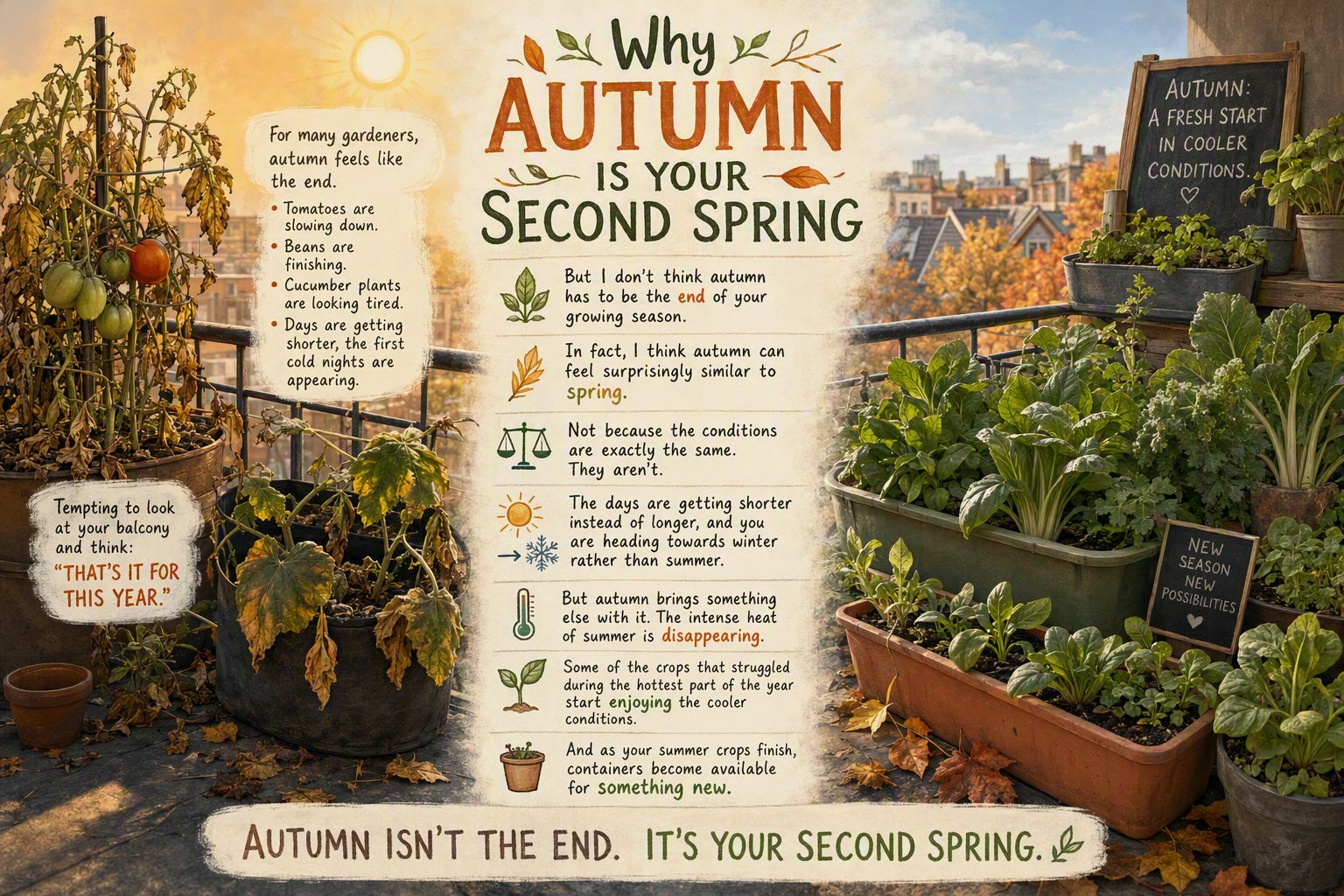
For many gardeners, autumn feels like the end.
The tomatoes are slowing down. The beans are finishing. The cucumber plants are looking tired. The days are getting shorter, and the first cold nights are appearing.
It is tempting to look at your balcony and think:
“That’s it for this year.”
But I don’t think autumn has to be the end of your growing season.
Far from it.
In fact, I think autumn can feel surprisingly similar to spring.
Not because the conditions are exactly the same. They aren’t. The days are getting shorter instead of longer, and you are heading towards winter rather than summer.
But autumn brings something else with it.
The intense heat of summer is disappearing. Some of the crops that struggled during the hottest part of the year start enjoying the cooler conditions. And as your summer crops finish, containers become available for something new.
That makes autumn another opportunity to start growing.
A second spring, if you like.
And if you are growing food on a balcony, that change in perspective can make a surprisingly big difference.
I love growing food in autumn.
No empty containers yet on my balcony!
Summer Is Not The End
Traditional vegetable gardening often has a very clear rhythm.
You sow and plant in spring.
You grow and harvest through summer.
Then autumn arrives, the plants are cleared away, and the garden settles down for winter.
There is nothing wrong with that approach.
But when you are growing food in containers, particularly on a balcony, you have an opportunity to do things differently.
You don’t have to think of the whole balcony as having one growing season.
Each container can have its own growing cycle.
One pot might be producing tomatoes while another has lettuce. One might be waiting for a summer crop to finish while another is already available for something new.
This means that the end of one crop does not necessarily mean the end of food production.
It can simply mean that the container is ready for its next job.
That is an important distinction.
You can grow food in containers all year long if you want to.
When a tomato plant has finished, for example, the tomato season in that container may be over.
But the container itself hasn’t finished producing food.
It has simply become available again.
And that is where autumn becomes interesting.
Why Autumn Feels Like A Second Spring
There is a point in autumn when the character of the balcony changes.
The intense summer heat fades.
The air becomes cooler.
The plants that were struggling during the hottest weeks can suddenly look happier.
And you can start growing crops that prefer these milder conditions.
This is why I like thinking of autumn as a second spring.
You are starting things again.
The difference is that you are starting a different group of crops and working with a different direction of the seasons.
In spring, temperatures are generally moving upwards and daylight is increasing.
In autumn, temperatures are moving downwards and daylight is decreasing.
So autumn isn’t simply spring with the dates changed.
You have to take the shorter days into account.
Plants grow differently when there is less available light. Temperatures can change quickly. And the window for getting a crop established before winter becomes increasingly important.
But that does not make autumn unproductive.
It simply means that you need to choose your crops and timing with a little more care.
For many leafy crops and other plants that prefer cooler conditions, autumn can actually be a very pleasant time to grow.
And on a balcony, where you are working with containers rather than a large piece of ground, that can be a very worthwhile opportunity.
Make The Most Of Your Summer Containers
One of the biggest opportunities in autumn comes from the containers that your summer crops are leaving behind.
By this point in the year, some of your pots may have been occupied by the same crop for months.
A tomato plant may finally be slowing down.
A bean plant may have produced its last meaningful harvest.
A cucumber plant may be looking increasingly tired.
When a crop is genuinely finished, remove it.
But don’t automatically clear everything just because the calendar says autumn has arrived.
If a plant is still healthy and producing food, there may be no reason to remove it yet.
Let it continue.
This is one of the advantages of thinking about the balcony as a food-producing system.
You don’t have to make one big decision about the entire balcony.
You can make decisions container by container.
One pot may still be producing.
Another may be ready for clearing.
A third may already have a new crop growing.
That creates a gradual transition rather than an abrupt end to the season.
And every container that becomes available gives you another opportunity.
Before you clear a summer container, ask yourself:
What could grow here next?
That one question can change the way you use your balcony.
Choose Crops For The Conditions
Once you start looking at autumn as another growing opportunity, it can be tempting to grow anything and everything.
But this is where sensible crop selection matters.
Autumn is not the time to try to force warm-season crops to continue indefinitely.
Instead, look towards crops that are comfortable with cooler conditions.
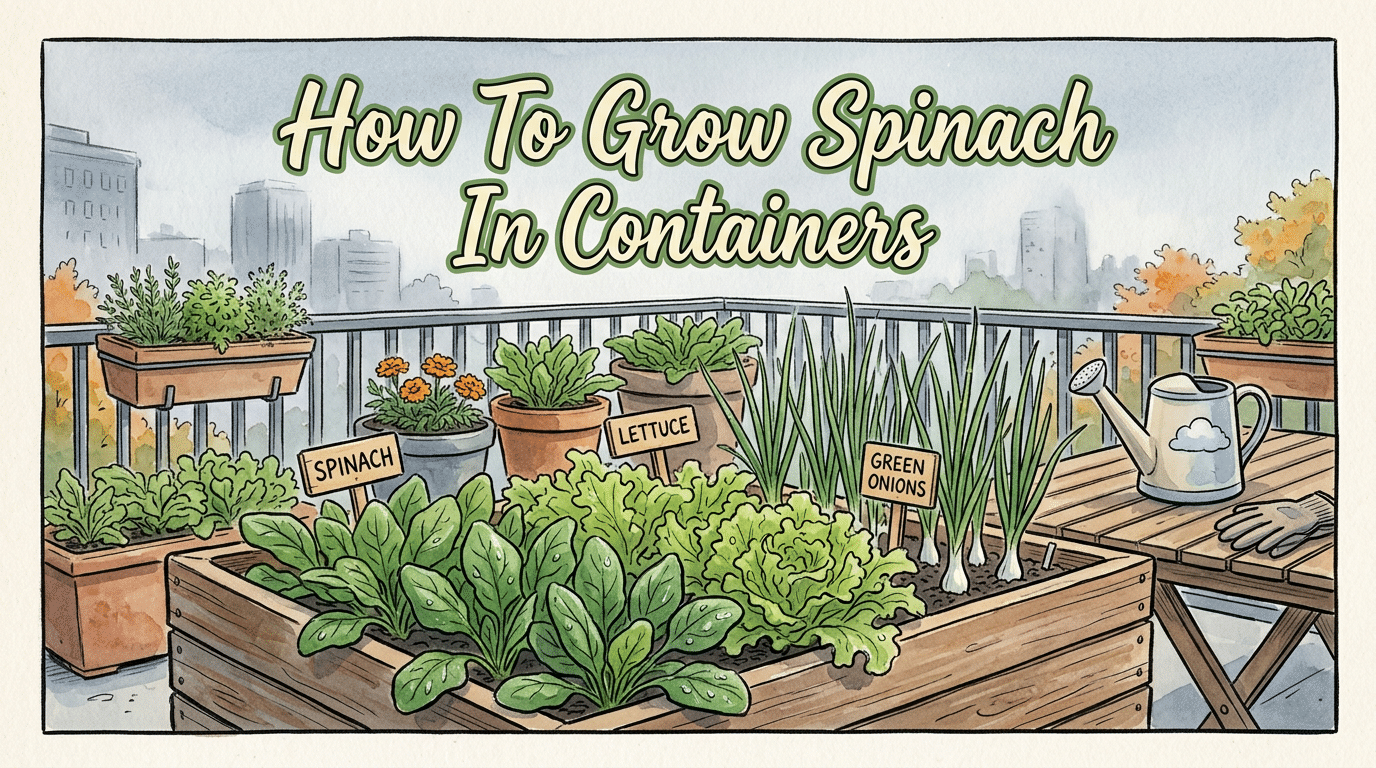
Lettuce is an obvious example.
Rocket (arugula) is another.
Radishes and green onions can also fit into an autumn growing plan, depending on your conditions and timing.
Spinach is another crop that can be sown as the weather cools.
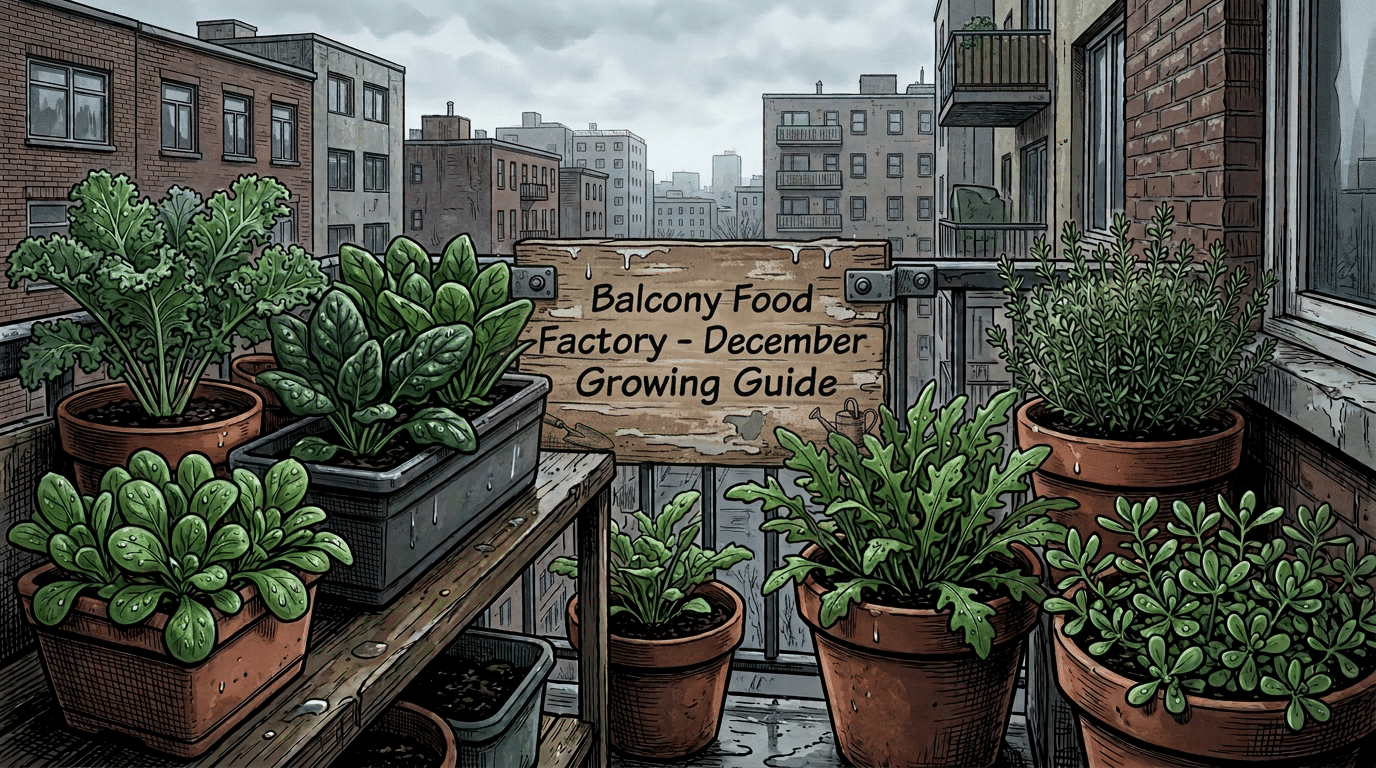
Kale is another strong candidate.
And there are plenty of other possibilities.
The important point is not to create a universal list of “autumn crops” that must be grown everywhere.
Your climate factors in.
Your balcony factors in.
Your exposure factors in.
And the actual weather you are experiencing matters too.
A sheltered south-facing balcony can behave differently from an exposed balcony several floors higher on the other side of a building.
This is why I prefer thinking in terms of conditions rather than rigid dates.
The calendar can give you a useful starting point.
But the plants and the weather get the final say.
Start Thinking About Winter Harvests

One of the most distinctive things about autumn growing is that not everything you start now has to be harvested immediately.
Some crops can be grown for an autumn harvest.
Others can be established before winter and then provide food later.
This gives you another way to extend the productive life of your containers.
Winter purslane is a good example of the sort of crop that can make the colder months more interesting for a balcony gardener.
Instead of thinking:
“Summer is finished, so I need something to grow now.”
you can also think:
“What can I grow now that will give me something to harvest later?”
That is a very different approach.
You are no longer simply reacting to what is happening today.
You are planning for future harvests.
And this is particularly valuable when you have limited space.
You don’t need dozens of containers full of crops that are all ready at the same time.
You want a sequence of crops moving through your available space.
Some are being harvested.
Some are growing.
Some are just getting started.
And some are waiting for their turn.
That is how a small balcony can keep producing food over a surprisingly long period.
Succession Planting Does Not Stop In August
Succession planting is often presented as something you do in spring.
You sow lettuce.
A few weeks later, you sow more.
Then more again.
This helps spread the harvest rather than producing everything at once.
But in my garden, succession planting is not just a spring technique. It is a way of thinking about the entire growing season.
When one crop finishes, another can take its place.
That principle becomes particularly valuable towards the end of summer.
Imagine a container that has been producing beans.
Eventually, the beans finish.
You remove the plants.
The container is now available.
If the conditions are still favorable, you can use that space for another crop.
You have effectively harvested one crop and started the next.
Also, certain crops you grew in spring but bolted when summer came around, such as rocket and cilantro, can be sown again and thrive in autumn.
That is succession planting on a container scale.
And because containers are separate units, you can do this gradually across the balcony.
You don’t need to make everything happen at once.
In fact, you probably shouldn’t.
A balcony with crops at different stages is often much more productive than a balcony where everything was planted on the same day.
Don’t Empty Everything At Once
There is something very satisfying about an autumn clear-out.
You remove the tired plants.
You empty the containers.
You sweep the balcony.
Everything looks clean and organized.
And then you look around and realize that you have just removed almost everything that was still producing food.
I’ve done enough gardening to know that tidy and productive are not always the same thing.
There is nothing wrong with cleaning up.
But don’t clear healthy, productive plants simply because summer is officially over.
If a crop is still giving you worthwhile harvests, let it continue for as long as conditions allow.
At the same time, you can begin preparing containers that have genuinely become available.
This creates a staggered transition.
Instead of:
Summer ends → everything gets cleared → winter begins
you get something more like:
Summer crops finish → containers become available → new crops go in → remaining summer crops continue producing → more containers become available → the cycle continues.
That second version is much closer to how I want my Balcony Food Factory to operate.
There is always something happening somewhere.
Autumn Is A Great Time To Experiment
There is another reason I like autumn.
It gives you another chance to learn.
If you have been gardening for a while, you probably already have a good idea of what works for you during spring and summer.
But there are always crops you haven’t tried.
There are different varieties.
There are different combinations.
There are different sowing times.
And there are always things that don’t work exactly as expected.
Autumn gives you another growing window in which to experiment.
You don’t have to dedicate the entire balcony to an experiment.
Try one container.
Try one variety.
Try a slightly different timing.
See what happens.
Keep notes if that helps you.
Perhaps something grows much better in autumn than you expected.
Perhaps a crop that performs brilliantly in spring struggles once the days become shorter.
Perhaps you discover that a particular container is especially sheltered and stays productive longer than others.
These little observations are valuable.
Over time, they help you understand your own balcony.
And that knowledge is often more useful than a generic set of gardening instructions.
Your balcony has its own microclimate.
You are the person who gets to observe it year after year.
Let The Weather Guide You
One of the biggest mistakes a beginner can make is treating a gardening calendar as though it were a set of laws. I know I did when I started all those years back.
Sow this on this date.
Plant that on that date.
Harvest this during that month.
It sounds reassuring.
But I know now: gardening doesn’t work quite that neatly.
Autumn is a particularly good example.
The difference between one year and the next can be significant.
One September may be warm and sunny.
Another may be cool and wet.
A sheltered balcony can have very different conditions from an exposed one.
And the same calendar date can produce very different growing conditions from one year to another.
That doesn’t mean you should ignore timing.
Timing is important.
It simply means you should combine the calendar with observation.
Look at the temperature.
Look at the daylight.
Look at the weather forecast.
Look at your plants.
And think about what you are asking a crop to do.
A plant needs enough time to establish itself before conditions become difficult.
The later you get into autumn, the more important that becomes.
This is why I prefer to play it safe rather than push a crop beyond what the conditions can reasonably support.
There is no prize for sowing something too late and then spending weeks wondering why it isn’t growing.
Build Your Second Spring Step By Step
You don’t need a complicated autumn strategy.
Start by looking at what you already have.
Step 1: See What Is Still Producing
Walk around your balcony.
Which plants are still healthy?
Which ones are still giving you worthwhile harvests?
Leave productive plants alone for now.
Step 2: Identify The Containers That Are Becoming Available
Look for summer crops that are clearly reaching the end of their productive life.
These are the containers that can become your next growing opportunities.
Step 3: Remove Finished Crops
Once a crop is genuinely finished, clear it out.
Don’t keep an exhausted plant occupying valuable space simply because you haven’t decided what comes next.
Step 4: Prepare The Container
Check the potting mix and refresh it where necessary.
Add compost or nutrients according to your normal container-growing approach and the needs of the next crop.
Step 5: Choose A Suitable Autumn Crop
Think about what the conditions are telling you.
Choose something that can cope with the cooler temperatures and shorter days rather than trying to recreate summer.
Step 6: Think Beyond The Next Harvest
Ask whether you are growing for an autumn harvest, a later harvest, or both.
This helps you make better decisions about which crops are worth starting.
Step 7: Keep The Transition Moving
As more summer crops finish, repeat the process.
Clear.
Prepare.
Plant.
Harvest.
Repeat.
That is all there is to it.
You don’t need to redesign your entire balcony.
You simply need to keep making productive use of the space as it becomes available.
A Balcony Food Factory Does Not Have An Off Switch
I think this is one of the most useful changes you can make to your thinking about balcony gardening.
The growing year doesn’t have to be divided into:
Planting season.
Growing season.
Harvest season.
Nothing until next spring.
Instead, think of it as a series of overlapping opportunities.
One crop finishes.
Another begins.
One container becomes available.
Another is still producing.
A spring crop gives way to a summer crop.
A summer crop gives way to an autumn crop.
And some autumn crops can carry you into winter.
That doesn’t mean your balcony will produce the same amount of food in every month.
It won’t.
There will be periods of abundance and periods when production naturally slows down.
That’s perfectly normal.
The point is simply to make use of the opportunities that each season provides.
And autumn provides more opportunities than many balcony gardeners realize.
So when your summer crops begin to fade and the first signs of autumn appear, don’t immediately think:
“The growing season is over.”
Ask a different question:
“What can grow here next?”
That question is at the heart of the Balcony Food Factory.
Because a productive container isn’t finished when one crop finishes.
It is ready for its next harvest.
And that is why autumn can be your second spring.
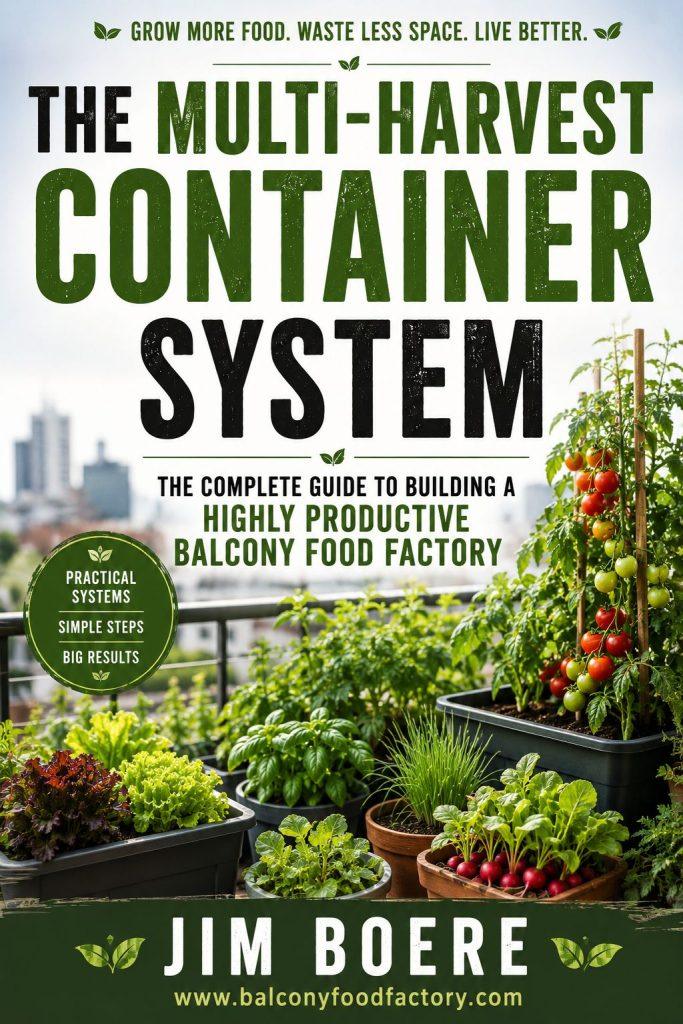
If you want to learn the complete system, my book The Multi-Harvest Container System Starter Guide brings together the principles of succession planting, companion planting, soil management and efficient container growing, along with practical high-yield container setups you can adapt to your own balcony.
Recommended Further Reading
Want to explore this idea further? These articles are a good place to continue:
How To Keep Your Balcony Food Factory From Going To Zero
How Productive Can A Balcony Container Really Be?
One Pot, Multiple Harvests: The Idea Behind The Multi-Harvest Container System
About Me
I’m Jim, the gardener behind Balcony Food Factory.
I’ve been growing food for decades, from allotments to my current 10th-floor balcony, where I’ve learned how to grow a surprising amount of food in a surprisingly small space.
Balcony Food Factory is where I share what I’ve learned about growing more food in containers, making the most of limited space, and keeping things practical and manageable.
Want more? Subscribe to the Balcony Food Factory newsletter and I’ll send you practical growing advice, ideas and lessons from my own balcony garden straight to your inbox. You’ll get the below eBook for free too, as a welcome gift. Just click on the image to sign up.
See you there!

A Note About Climate
I garden in Schiedam, the Netherlands, where we have a temperate maritime climate with mild winters, relatively cool to warm summers, and rainfall throughout the year. As a general comparison, my location is approximately USDA Hardiness Zone 8b.
Growing conditions vary considerably between regions, so planting dates, growing seasons, temperatures, and crop recommendations may differ where you live. Please adapt the advice in my articles to your own local climate, weather patterns, and growing conditions.


Leave a Reply