
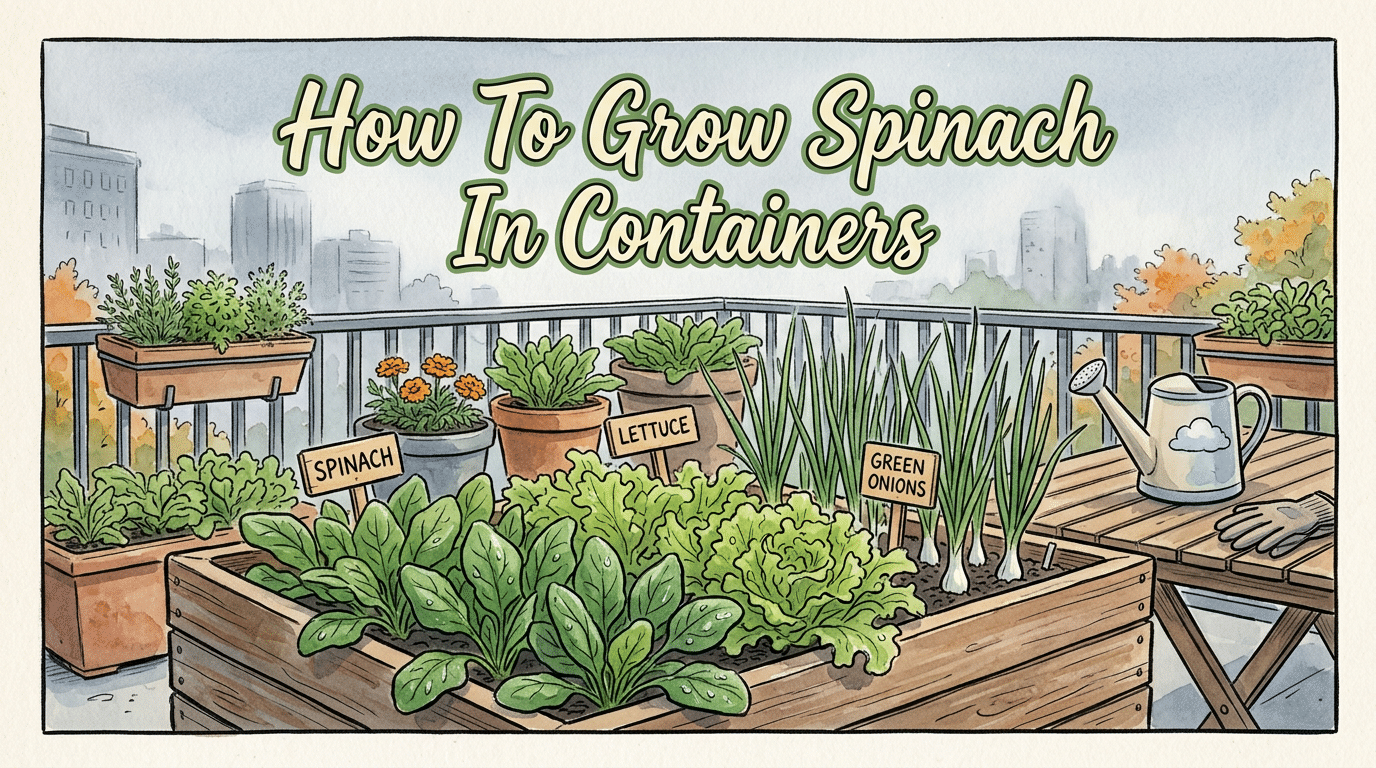
Spinach is one of those crops that perhaps deserves more attention from balcony gardeners. Why not try and grow spinach? It grows well in containers, produces nutritious leaves, and is particularly valuable during the cooler parts of the growing season.
With the right approach, a single container can provide several harvests rather than just one.
It also fits naturally into a productive container garden.
While summer crops such as tomatoes and cucumbers are winding down, spinach can take advantage of the cooler weather. Sow a little at a time, harvest regularly, and plan what comes next, and you can keep your growing space productive for much longer.
That is exactly the kind of thinking behind the Multi-Harvest Container System: make good use of limited space, harvest crops in ways that extend their productive life, and keep the cycle moving through the seasons.
Here is how to grow spinach in containers and get more from every sowing.
Spinach At A Glance
| Growing Detail | What You Need To Know |
|---|---|
| Crop Type | Leafy green vegetable |
| Best Growing Seasons | Spring and autumn, with suitable varieties and conditions |
| Container Growing | Very well qualified |
| Container Size | A wide container around 15–20 cm (6–8 inches) deep is a useful starting point |
| Sunlight | Sun in cooler weather; some afternoon shade can help in warmer conditions |
| Watering | Keep the potting mix evenly moist but not waterlogged |
| First Harvest | Often around 4–8 weeks after sowing, depending on variety and conditions |
| Harvesting | Pick outer leaves or harvest whole plants |
| Succession Sowing | Sow small batches approximately every three weeks during suitable growing periods |
| Main Challenge | Warm weather can encourage premature flowering |
These are general guidelines rather than guarantees. Variety, daylight, temperature, and growing conditions all affect how quickly spinach develops and how long it remains productive.
Why Start Growing Spinach In Containers?
Spinach has several advantages for anyone growing food in a limited space.
It produces useful harvests from a small area. You do not need a garden bed to grow enough leaves for salads, omelets, pasta dishes, soups, or side dishes. A good size container can hold several plants, and the leaves can be harvested as they develop.
You can harvest more than once. When you pick the outer leaves carefully and leave the growing center intact, the plant can continue producing new growth. You do not necessarily need to pull up the entire plant after your first harvest.
It is especially useful in cooler weather. Spinach generally performs better in spring and autumn than during hot summer conditions. This makes it a valuable crop for filling the gap between the main summer growing season and winter.
It works well with succession planting. Instead of sowing all your spinach at once, you can sow small batches at intervals. The plants will reach harvest size at different times, helping to spread your harvests over a longer period.
This last point is particularly meaningful. A productive balcony garden is not just about how much food you can grow at one time. It is also about how consistently you can harvest it.
Choosing The Right Spinach Varieties
When buying spinach seeds, look for varieties suited to the season in which you intend to grow them.
Some varieties are better for spring sowing, while others are selected for autumn growing or improved tolerance of warmer conditions. Seed packets usually provide information about recommended sowing periods and the variety’s growing characteristics.
For a container garden, look for a variety that:
- Is suitable for outdoor growing in your climate.
- Performs well during the season when you plan to sow it.
- Produces good-quality leaves for repeated harvesting.
- Has higher resistance or tolerance to bolting, particularly if you intend to grow it near the warmer end of its recommended season.
Bolting happens when a plant shifts toward flowering and seed production. In spinach, warm conditions and other stresses can encourage this change. Once a plant begins to bolt, its leaves may become less appealing, and continued leaf production usually declines.
You do not need to grow several varieties to get started. One reliable variety that fits your local growing conditions is enough.
Once you have some experience, you can experiment with different varieties and compare how they perform at different times of the year.
Choosing A Container And Potting Mix
Spinach does not need an enormous container, but it does need enough room for its roots and leaves to develop.
From a practical standpoint, most containers can grow spinach but you do want a meaningful harvest if your intent is to eat your spinach cooked. As we all know, the leaves wilt considerably and you need quite a few of them to prepare a meal.
So do consider this when deciding how much of your container space you can and want to allocate. Personally, I use the spinach I grow mainly for salads, soups and smoothies, so that I do not need loads of leaves to still add some of these beautiful vitamins to my diet.
Choose A Wide Container
A wide pot or planter is often more practical than a narrow, deep pot because you can grow several plants together and harvest from different areas.
A container around 15–20 cm (6–8 inches) deep is a reasonable starting point for spinach. A greater depth can provide more room for roots and a larger volume of potting mix to retain moisture.
Make sure the container has drainage holes. Spinach appreciates consistent moisture, but roots should not sit in waterlogged potting mix.
Remember that a container also needs to be practical for your balcony. Consider its weight when filled with wet potting mix, and make sure it can be positioned safely in a spot with sufficient light and protection from strong winds.
Use A Good-Quality Potting Mix
Choose a good-quality potting mix that holds moisture while allowing excess water to drain away.
Avoid using ordinary garden soil in containers. It can become compacted and may not provide the balance of drainage and aeration that container-grown plants need.
Start with a potting mix that contains enough nutrients for initial growth. As the plants grow and you harvest leaves, you may need to replenish nutrients to support continued production.
This is one of the practical principles of the Multi-Harvest Container System: the potting mix is not something you prepare once and then ignore indefinitely. Its condition and nutrient supply matter throughout the growing cycle.
When To Sow Spinach

Spinach is a cool-season crop, so timing is important. In many climates, spring and autumn offer the best conditions for sowing and growing it.
For reference: I live in Schiedam, The Netherlands; a USDA Zone 8b-type climate.
| Season | Growing Approach | What To Watch For |
|---|---|---|
| Spring | Sow as conditions become suitable for your variety | Avoid letting plants dry out as temperatures rise |
| Early Summer | Sow only if your variety and local conditions make it practical | Heat can reduce performance and encourage bolting |
| Late Summer | Begin sowing for autumn production when temperatures start to moderate | Keep newly sown seeds evenly moist |
| Autumn | Sow batches for harvest during cooler weather | Allow enough time for plants to establish before growth slows |
| Winter | Harvest established plants when conditions allow | Growth may be slow, especially with limited daylight or severe cold |
The exact sowing windows depend on your local climate and the variety you choose. A schedule that works in a mild maritime climate may not work in a region with very hot summers or harsh winters.
Why Autumn Is Particularly Valuable
Autumn is an important season for spinach because it allows you to put containers back to work after the summer crops begin to finish.
A tomato plant may have occupied a large container for months. Once it has finished producing and you remove it, that container does not have to remain empty until the following spring. After clearing out the old plant and refreshing the potting mix as needed, you can use the space for spinach or another cool-season crop.
You can also sow spinach into containers that are already being used for other leafy crops, provided there is enough room and the plants will not compete excessively.
This is the kind of seasonal transition that helps keep a balcony garden productive beyond the main summer harvest.
Sow Small Batches Rather Than Everything At Once
For a steady supply, try sowing a small batch of spinach approximately every three weeks during the growing season.
The goal is not to produce a large number of plants that all mature at once. It is to create an overlap between plants at different stages of growth.
Some batches will be ready to harvest while others are still developing. As one group approaches the end of its productive life, the next group can take over.
You may need to adjust the interval according to the season. Spinach grows more slowly when conditions are cool and daylight is limited, while heat can shorten its productive harvesting period.
How To Sow And Grow Spinach

Spinach is straightforward to grow from seed, and direct sowing into its final container is often the simplest approach.
I never start spinach indoors, simply because there is no need to.
Step 1: Prepare The Container
Fill your container with good-quality potting mix, leaving a little space below the rim for watering.
Moisten the mix before sowing so that it is damp throughout rather than dry and dusty. Check that excess water can drain freely.
Step 2: Sow The Seeds
Follow the sowing depth and spacing recommendations on your seed packet. Spinach seeds are generally sown relatively shallowly.
You can sow seeds in short rows or spread them through the available space, depending on how you want to arrange the plants.
Avoid sowing far more seeds than you need. Although you can thin seedlings later, overcrowding makes it harder for individual plants to develop properly.
Step 3: Keep The Potting Mix Moist
During germination, the surface of the potting mix should not be allowed to dry out completely.
Water gently so that you do not wash the seeds away or expose them at the surface. Once the seedlings emerge, continue checking moisture regularly.
Germination can be less reliable when the mix repeatedly dries out or becomes excessively hot. In warm weather, you may need to pay particular attention to the container’s position and moisture level.
Step 4: Thin The Seedlings
If too many seedlings emerge close together, thin them according to the spacing recommended for your variety and intended harvest size.
Give the remaining plants enough room to develop healthy leaves. Overcrowded spinach is harder to harvest, and plants compete for light, moisture, and nutrients.
–> TIP: Use the thinnings in the kitchen. That turns an ordinary growing task into a small early harvest.
Step 5: Let The Plants Establish
Once the plants are growing well, concentrate on consistent moisture, suitable light, and healthy growth.
Remove damaged or yellowing leaves when appropriate, and inspect the plants regularly for signs of pests or other problems.
You do not need to do something to the container every day. The useful habit is to check the plants, assess what they need, and act when necessary.
That is a practical part of growing efficiently: regular observation prevents small problems from becoming bigger ones without turning gardening into a constant chore.
Watering And Feeding Spinach
Spinach grows best when the potting mix remains reasonably moist throughout the growing period.
Water Consistently
Container-grown spinach can dry out faster than plants growing in the ground, particularly when the weather is warm, sunny, or windy.
Check the potting mix rather than watering automatically according to a fixed schedule. If the surface is dry, check a little deeper before deciding whether to water. The aim is to maintain moisture without leaving the roots in saturated mix.
Repeated drying can stress plants and may contribute to poor growth or premature bolting. At the other extreme, waterlogged conditions can damage roots.
A container with good drainage and a suitable potting mix makes it much easier to maintain the balance.
Replace Nutrients As Needed
Spinach produces a substantial amount of leafy growth, and regular harvesting removes plant material that the crop has invested nutrients in producing.
Start with a suitable potting mix, then replenish nutrients during active growth when necessary. A light liquid feed every few weeks can be helpful, depending on the mix, the fertilizer, the rate of growth, and the product’s instructions.
You can also apply a compost top-dressing when appropriate, taking care not to bury the growing centers of the plants.
More fertilizer is not automatically better. Follow the instructions for the product you use and avoid excessive feeding.
In the Multi-Harvest Container System, maintaining the potting mix is part of maintaining productivity.
If you want a container to support repeated harvests and successive crops, you need to consider not only what you plant but also what the potting mix needs to keep supporting healthy growth.
How To Harvest Spinach For Repeated Crops
One of spinach’s biggest advantages is that you have a choice about how to harvest it.
Method 1: Harvest The Outer Leaves
For repeated harvesting, pick the larger outer leaves while leaving the growing center intact.
Use clean fingers or scissors, and avoid damaging the central growing point. Take only what you need, especially when the plants are still relatively small.
With favorable conditions and careful harvesting, the plant can continue producing new leaves. Return to the container regularly and harvest as the leaves reach a usable size.
This approach is especially helpful when you want small, fresh harvests for everyday meals rather than a large amount of spinach all at once.
It is also a good example of making a crop work harder. Instead of removing the whole plant after the first harvest, you extend its productive period.
Method 2: Harvest The Whole Plant
You can also harvest an entire plant when it reaches a mature size.
This is practical when you want a larger quantity of spinach for cooking, or when a plant is beginning to bolt or has reached the end of its harvesting period.
Remove the plant and assess the remaining space. Prepare it for the next planting.
Which Method Is Better?
Neither method is always best. The choice depends on the condition of the plant, the season, and how much spinach you need.
| Harvesting Method | Best Use | What Happens Next |
|---|---|---|
| Outer-Leaf Harvesting | Small, repeated harvests over time | Leave the growing center intact and continue monitoring the plant |
| Whole-Plant Harvesting | A larger harvest or removal of a finished plant | Clear the space and sow or plant a replacement when conditions allow |
The important thing is to harvest with a purpose. Think about what you need from the plant now and how you want the container to perform over the following weeks.
Growing Spinach With The Multi-Harvest Container System
The Multi-Harvest Container System is built around a simple idea: a productive container garden should be managed as a series of overlapping harvests, not as a collection of pots that are planted once and then left until everything matures.
Spinach is an excellent crop for putting this approach into practice.
Principle 1: Keep Succession Planting Moving
Rather than sowing all your spinach at once, sow a small batch approximately every three weeks during the growing season.
This creates plants at different stages of development. While one batch is producing leaves, another is growing toward its first harvest.
You do not need to follow the interval blindly. Adjust it according to the season, the space you have available, how much you want to eat, and how quickly your plants are developing.
The aim is to avoid having all your spinach reach maturity at the same time, followed by a long period without a harvest.
Principle 2: Harvest For The Longest Useful Production Period
When plants are healthy and growing well, harvesting the outer leaves can extend the time you get harvestable leaves from each plant.
This is not an unlimited harvest though. Plants do eventually slow down, become stressed, or begin flowering. When that happens, recognize the change and decide whether to keep harvesting or replace the crop.
The system is about managing the whole production cycle, not trying to make one plant produce forever.
Principle 3: Combine Crops Thoughtfully
Spinach can form part of a mixed container, provided the crops have compatible growing requirements and enough room.
Compact crops such as green onions may fit around the edges of a spinach container, while other leafy greens can be grown alongside spinach when spacing and seasonal conditions allow.
However, companion planting does not mean filling every gap with another plant. Too many plants competing in one container can reduce growth and make watering and harvesting more difficult.
Choose combinations that use the available space efficiently without compromising the main crop.
Principle 4: Maintain The Potting Mix
Repeated harvests and successive crops depend on a potting mix that continues to support healthy plants.
Start with a good potting mix, maintain consistent moisture, and replenish nutrients as needed. When a crop finishes, remove its remaining plant material and assess the condition of the mix before replanting.
If the mix has become depleted or compacted, deal with that before asking the next crop to grow in it.
This is what makes the system a cycle rather than a one-off planting project: the container, the plants, the harvest, and the potting mix all need to be considered together.
Principle 5: Plan Seasonal Transitions Before The Container Is Empty
Spinach is particularly valuable when summer production begins to decline.
Imagine that a container has held a summer crop for several months. As the plant finishes, you can begin planning its replacement rather than waiting until the container is empty to think about what comes next.
Spinach can take over during the cooler part of the year. Later, as spring returns, you can plan the next transition according to your climate and growing calendar.
You may not be able to grow spinach continuously throughout the year, and some containers will naturally have quieter periods. The goal is to reduce unnecessary gaps and make the most of the seasons in which each crop performs well.
Put The Cycle Into Practice
For spinach, the cycle can be as straightforward as this:
Sow → Grow → Harvest → Sow The Next Batch → Repeat
At each stage, ask yourself three practical questions:
- What can I harvest now?
- What will be ready next?
- What should replace the crop when it finishes?
These small decisions help turn a balcony garden into a more dependable source of fresh food.
Companion Planting: What To Grow With Spinach
Companion planting can help you use container space efficiently, but the combination needs to make sense for the crops involved.
Spinach generally prefers cooler growing conditions and consistent moisture. Its companions should be compatible with those requirements and should not crowd it out.
Green Onions
Green onions can be a good companion because they grow relatively upright and occupy a different shape of space from spinach’s spreading leaves.
They can provide an additional harvest from the same container, provided the plants are spaced appropriately and neither crop is crowded.
Other Leafy Greens
Lettuce and rocket can also be grown in a mixed leafy-green container. This gives you different flavors and textures to harvest from the same area.
However, the plants still need enough room, light, moisture, and nutrients. A mixed container is not automatically more productive than a container dedicated to one crop.
Garlic And Other Longer-Term Crops
Garlic can occupy a container for many months, so it requires a different kind of planning from a fast-growing leafy crop. A combination with spinach may be possible when the container is large enough and the arrangement allows both crops to develop properly.
Think carefully before combining crops with very different timelines or space requirements. A companion should contribute to the container’s productivity, not simply occupy a spare patch of potting mix.
Cavolo Nero / Kale
As you’ve seen in the picture above, I’ve also grown spinach underneath cavolo nero.
This worked very well because the kale grew up and left all this space around the stem, perfect for a shallow rooted low-growing crop such as spinach.
When To Grow Spinach On Its Own
There is nothing wrong with giving spinach its own container. In fact, this can make spacing, watering, harvesting, and succession sowing easier for beginners.
The Multi-Harvest Container System is not about forcing as many different crops into every pot as possible. It is about choosing a sensible combination of crops and managing them well.
A well-planned single-crop container can be highly productive, particularly when you sow in batches and replace plants at the right time.
Common Spinach Growing Problems And How To Solve Them
| Problem | Possible Cause | What To Do |
|---|---|---|
| Plants Begin Flowering Too Early | Warm weather, variety choice, or stress | Harvest healthy leaves, choose a more suitable variety next time, and sow a replacement when conditions improve |
| Poor Germination | Potting mix drying out, unfavorable temperatures, or seed issues | Keep the mix evenly moist and follow the seed packet’s recommendations |
| Slow Growth | Cool conditions, insufficient light, crowding, or limited nutrients | Check growing conditions, thin crowded plants, and replenish nutrients when needed |
| Yellowing Leaves | Watering problems, nutrient deficiencies, aging leaves, or other plant stress | Check moisture and drainage, remove old leaves, and assess whether the plants need nutrients |
| Wilting | Dry potting mix, excessive heat, or root problems | Check moisture before watering and make sure excess water can drain |
| Small Leaves | Crowding, poor growing conditions, or plants being harvested too heavily | Give plants enough room and allow them to recover between harvests |
| Holes Or Damaged Leaves | Slugs, snails, caterpillars, or other pests | Inspect leaves regularly, identify the cause, and use an appropriate control method |
| Plants Become Tough Or Less Productive | Plants are aging, stressed, or approaching flowering | Harvest what remains useful and consider replacing the plants |
These symptoms can have more than one cause, so look at the whole plant and its growing conditions before deciding what to change.
Pay Particular Attention To Heat
Heat is one of the most common challenges when growing spinach. A container on a sunny balcony can warm up quickly, especially during a heatwave.
If temperatures rise, check the potting mix more frequently and consider whether a position with some afternoon shade would help. I sometimes place a container behind a bigger one, so in its shade, when the sun is fierce.
If your spinach starts flowering, do not treat it as a gardening failure. It is part of the plants natural life cycle. Learn from it, about its productive season, or best position on your balcony.
Harvest any usable leaves and plan the next sowing.
Or, you could let the plant flower and set seed, then harvest the seeds. Store them in a paper envelope in a cool dark place and save on next year’s seed buying expense.
That response is more productive than repeatedly trying to grow a cool-season crop in conditions it does not enjoy.
Frequently Asked Questions
Can Spinach Grow In A Pot?
Yes. Spinach is well suited to container growing. Choose a container with adequate depth, good drainage, and enough width to accommodate several plants at their recommended spacing.
How Deep Should A Container Be For Spinach?
A container around 15–20 cm (6–8 inches) minimum will suffice. Wider containers give you room to grow several plants together. Always consider the variety, the number of plants, and the space available.
Remember the shallower the container, the quicker it tends to dry out, so monitor moisture levels closely.
How Often Should I Sow Spinach?
Try sowing a small batch approximately every three weeks or so during the growing season. Adjust the interval according to how quickly the plants grow and how much spinach you use.
The goal is to stagger harvests rather than produce everything at once.
Can I Harvest Spinach Without Pulling Up The Whole Plant?
Yes. Pick the larger outer leaves while leaving the growing center intact. This allows a healthy plant to continue producing new leaves for longer.
You can of course harvest whole plants when you need a larger quantity or when the plants are nearing the end of their productive period.
Can I Grow Spinach In Summer?
It depends on your climate and variety. Spinach generally prefers cooler conditions, and hot weather can encourage premature flowering.
If you want to grow it during warmer periods, look for the best suited variety, monitor moisture carefully, and consider some afternoon shade. In very hot conditions, it may be more practical to focus on other crops and return to spinach when temperatures moderate.
Can Spinach Survive Winter In A Container?
Established spinach plants can tolerate some cold, but the result depends on the variety, the severity and duration of the cold, the container, and local conditions.
Growth usually slows when temperatures and daylight decline. In mild climates, you may continue harvesting leaves during winter, although production can be limited. In colder regions, plants may need protection, and severe conditions can damage or kill them.
Can I Grow Spinach With Lettuce?
Yes, spinach and lettuce can grow together if the container provides enough room and both crops receive suitable conditions. They are both useful leafy crops for a productive container garden.
Pay attention to spacing and avoid sowing so densely that the plants compete excessively.
Why Is My Spinach Flowering Too Early?
Spinach may bolt when temperatures rise or when growing conditions stress the plants. Variety choice and sowing time also matter.
Harvest any healthy leaves, then plan a replacement sowing for perhaps a more favorable part of the season. If early bolting happens repeatedly, check if you are watering enough, or try a variety better qualified for growing under your conditions.
Final Thoughts
Spinach is a valuable crop for balcony gardeners because it offers more than a single harvest. With correct timing, consistent moisture, and careful harvesting, you can pick leaves over a period of time and use the container productively during the cooler seasons.
The biggest improvement often comes from changing how you think about the container. Rather than sowing everything at once and waiting for one large harvest, sow in batches, harvest what is ready, and plan replacements before the growing space sits empty for too long.
That is the thinking behind the Multi-Harvest Container System. Each crop has a role, each season offers different opportunities, and every container can contribute to the overall harvest when you manage it with a little planning.
You do not need a large garden or dozens of pots to begin. Start with one container of spinach, learn how it performs in your conditions, and build your next sowing around what you observe.
Small, repeated harvests can make a meaningful contribution to the food you grow at home.
Happy growing on the balcony!
Jim
If you want to learn the complete system, my book The Multi-Harvest Container System Starter Guide brings together the principles of succession planting, companion planting, soil management and efficient container growing, along with practical high-yield container setups you can adapt to your own balcony.
Recommended Further Reading:
Explore more Balcony Food Factory crop growing guides HERE. I try to add a new guide to this page roughly once every two weeks, all free for you to download.
How To Grow Rocket In Containers
Spring: How To Get Your Balcony Food Factory Moving
Why Autumn Is Your Second Spring
About Me
I’m Jim, the gardener behind Balcony Food Factory.
I’ve been growing food for decades, from allotments to my current 10th-floor balcony, where I’ve learned how to grow a surprising amount of food in a surprisingly small space.
Balcony Food Factory is where I share what I’ve learned about growing more food in containers, making the most of limited space, and keeping things practical and manageable.
Want more? Subscribe to the Balcony Food Factory newsletter and I’ll send you practical growing advice, ideas and lessons from my own balcony garden straight to your inbox. You’ll get the below eBook for free too, as a welcome gift. Just click on the image to sign up.
See you there!

A Note About Climate
I garden in Schiedam, the Netherlands, where we have a temperate maritime climate with mild winters, relatively cool to warm summers, and rainfall throughout the year. As a general comparison, my location is approximately USDA Hardiness Zone 8b.
Growing conditions vary considerably between regions, so planting dates, growing seasons, temperatures, and crop recommendations may differ where you live. Please adapt the advice in my articles to your own local climate, weather patterns, and growing conditions.



Leave a Reply